
How often poetry and pun intersect with prophecy.
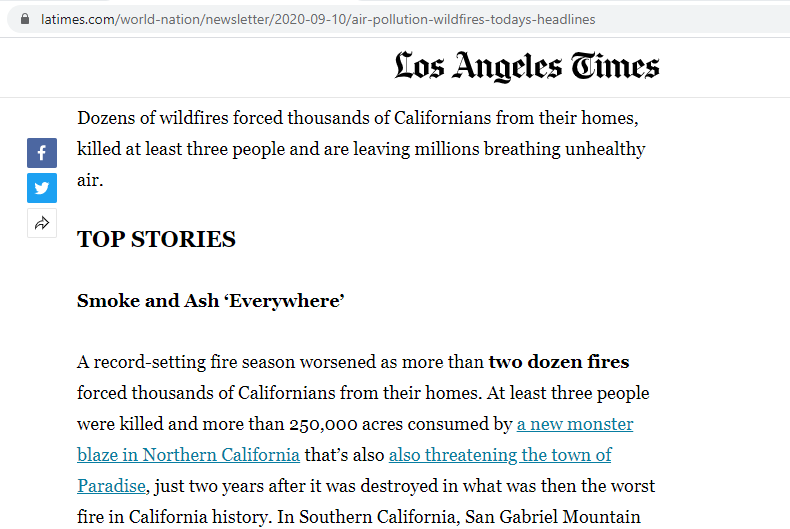
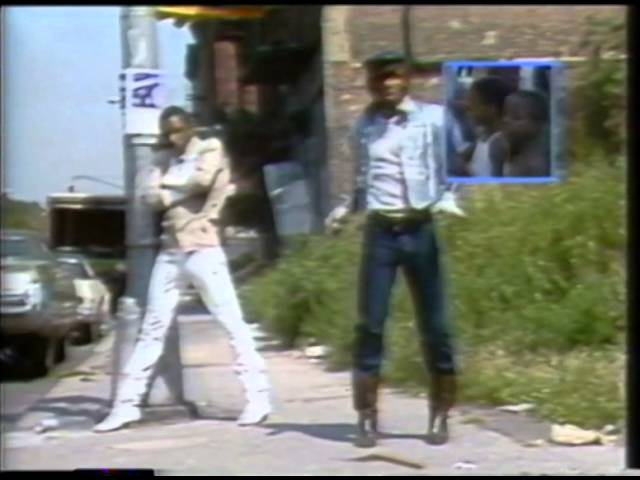
This past week, while scanning my daily email from the Los Angeles Times, I chuckled at Thursday’s headline: “Smoke and Ash ‘Everywhere'”. I couldn’t not hear the line that any rap fan worth their weight in a fat gold chain would know. The chorus for Grandmaster Flash and the Furious Five’s “The Message” starts out: “It’s like a jungle sometimes/ It makes me wonder how I keep from goin’ under” and then the verse starts: “Broken glass everywhere “. “Broken Glass” === “Smoke and Ash”. Just brilliant!
I found this headline so humorous – despite the incredibly concerning content about two dozen California fires – that I had to share it with a few friends. One wondered if the rhyme/pun was intentional (maybe?) – and another wrote: “I can hear that lyric in my head now. Those fires are terrible”.
The song, lauded over the years for its innovative instrumentation, has been sampled by Ice Cube and Puffy, and influenced countless of other songs and artists. According to a little research I did for this blog post, it also apparently foregrounded the MC for the first time in rap history, as opposed to the previous privileging of the DJ – permanently altering the art form. It was also apparently the first prominent hip hop song to provide a social commentary, paving the way for everything from conscious hip-hop to gangsta rap. More the latter than the former, unfortunately, due to the song’s fatalism (as opposed to hope) – which I’ll return to.
The irony in this metaphorical languaging became clear as I spoke to the Chair of a synagogue’s Green Action Team about how often his rabbi talks about climate change and other ecological concerns. He responded “Not enough – but one year for our High Holy Day services, she iterated the urgency of climate change, comparing it to broken windows theory”.
Of course, Broken Windows Theory refers to the 1982 article in The Atlantic Monthly by Kelling and Wilson which poses the following: if a building has a few broken windows, the tendency is for people to have less respect for the building, break more windows, then break into the buildings and eventually trash the neighborhood. Therefore, according to the theory, it is necessary to fix the windows before the situation gets out of hand. At first glance, this theory makes a lot of sense. Certainly, fixing windows in a neighborhood – and other clean-up initiatives – would probably contribute to the respect its given.
And yet, for decades, this theory has been used to enact draconian law enforcement policies. One of its authors, Rutgers criminologist George Kelling, was brought to Los Angeles by his protégé Police Chief William Bratton to advise around the City’s homelessness policy. They hold that punishing lesser offenses leads to reductions in major crimes. Following Kelling’s theory, and his own practices from working at NYPD, Bratton instituted increased arrests against so-called “quality of life criminals,” in an effort to curb the bigger crimes they supposedly lead to. And, rather than house the unhoused, Bratton criminalized sitting on the sidewalk and began to arrest homeless people for…well, being homeless.
Thankfully, over the last 15 years, the American Civil Liberties Union and other organizations advocating for Skid Row residents have fought this practice in the courts. Still, the metaphor of “cleaning up the neighborhood” resonates.
So let’s go back to our song lyric for a moment. “Broken glass everywhere” leads into Melle Mel rapping: “People pissin’ on the stairs, you know they just don’t care/ I can’t take the smell, can’t take the noise/ Got no money to move out, I guess I got no choice”. There is a deep fatalism in that last line: “I guess I got no choice”; this is just how it is. I get the enormity of social problems – but someone committed to a community can always try to fix broken windows rather than move out or give up.
Which brings us back to the rabbi preaching about climate change. I can only guess what she spoke about – probably the need to focus on our actions, our metaphorical “breaking of windows”, that lead to the planetary slum we’re apparently creating. We’ve watched more and more fires rage over these last few years, and despite good-natured (and somewhat impactful) personal choices to minimize carbon footprints, by most counts we only have a matter of decades before things get really bad.
To offer just one more metaphor: our environmental crises have been like the frog in boiling water. The climate is getting hotter and hotter and we haven’t noticed – we haven’t yet jumped out of the pot. We’ve watched the gradual downward spiral of how we treat the planet and, by-and-large, thrown our hands up like Melle Mel. But with these fires raging yet again, we must wonder when we’ll have had enough.
Smoke and ash “everywhere” is another broken window. How many more do we need to see – how many people “pissin’ on the stairs” before we respond. After these last few years of increasing natural disasters, resulting from climate change, it’s time for our little froggy faces to start asking: “how do we get out of this pot?”
In the Jewish world, we’re headed to the High Holy Days this week – a time to “turn” anything that must be turned. To do teshuvah, “return”. My rabbi preached the other day that until our very last breath, there’s always an opportunity to return. No matter how bad things get, there’s always hope. There’s a moment where we must say: “No more. I’ll sweep the glass off the concrete. I’ll put in a new window”.
“I’ll do tikkun“, to use the other relevant Hebrew word here, “repair”. This is our tikkun for this time. We must repair whatever needs to be mended: “I’ll fight for renewable energy – I’ll change my life as much as I need to – until all the climate scientists finally give a favorable prognosis”. What might it look like to tend to our world, to repair it? To attend to our broken glass and repair whatever is needed before this neighborhood called the planet becomes the block in “The Message”?
 Community Alchemist