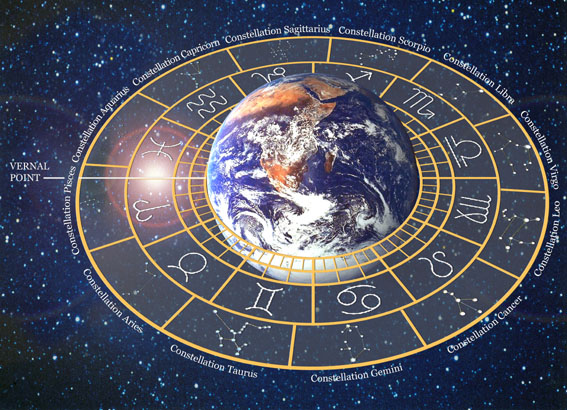
I don’t know much about astrology. And I certainly don’t want to be pigeonholed as someone who’s “into” astrology. Unfortunately, the study of how the alignment of stars and planets interacts with human rhythms and endeavors has been written off as “woo-woo” and “airy-fairy”. Yet, I have tried to pay attention to what data an astrological approach might offer my attempts to understand and powerfully engage with my destiny. I have less interest in daily predictions than I do the broad strokes of what I might need to pay attention to in the span of a year or an epoch.
I started to become interested in astrology a few years ago when I read my yearly horoscope at the end of the year – and saw how eerily some of the surprising occurrences throughout the year were nearly predicted by my chart. I looked at my horoscope for the first time when a friend suggested I had entered my “Saturn Return”, in response to my sharing that I was going through a particularly rough time. The idea, for those unfamiliar, is that the planet Saturn is at the same place at age 27 that it was at our birth. For some, it is a time of dramatic upheaval, lasting until age 32. Sure enough, my life was thrust into chaotic transformation at the moment of my 27th birthday and everything was (more or less) calm and settled by the time I turned 33.
Since that epiphany that astrology might offer an increased ability to make sense of seemingly random occurrences, I have sought the advice of my horoscope every year. I appreciate the writing of self-proclaimed Visionary Activist Astrologist Caroline Casey on the topic, who advises that we “Believe nothing, entertain possibilities” and “create prophecy” rather than “live prediction,” for predictions make us passive while prophecy is “active co-creation with the divine”. As a community-oriented depth psychologist, I study culture, myth, and archetype – and since astrology weaves together these factors of psyche, I consider it necessary to at least be familiar with, if not consult, the information that astrology makes available.
With that said, I get that people are cynical about what appears to be pseudo-science. Some are even angry that astrologers didn’t predict the coronavirus and its global impact on humanity. But astrologers simply interpret charts, and without a context of coronavirus, it wouldn’t necessarily show up. The particular perspective that an astrologer takes on a chart is vastly colored by what they’re looking for. In hindsight, however, one can gain some insight from the planets around our current pandemic. According to Susan Miller’s article on March 16:
“this crisis is brought to you by Pluto, a powerful planet that deals with huge financial matters, masses of people—and viruses,” while it’s conjunction with “Jupiter amplifies what Pluto reveals and wants to multiply, and few planets can multiply anything it touches faster than Jupiter.”
And:
“What makes this year’s orbit of Jupiter and Pluto different is that Saturn, the planet of karma, will orbit with them both all year in a highly unusual three-some tight orbit. The scientists say that our misuse of the earth’s resources and lack of proper stewardship of our planet have led to an imbalance that encourages deadly viruses to surface.”
From Casey’s Visionary Activist approach to astrology, it is evident that we might not depend on astrology to predict worldly occurrences, but we can turn to astrological interpretations to illuminate patterns and to offer increased meaning and understanding when there might otherwise be little method to apparent madness.
While I am curious about astrologers’ interpretations of the current times, my interest is more centered on the vast transitions occurring over centuries – which brings me to the Age of Aquarius. People might be most familiar with this concept through the cheesy song in the play Hair. While there might therefore be an association in popular culture between the Age of Aquarius and the “Hippy Era” of the ‘60’s and ‘70’s, astrological experts suggest that the ages of the zodiac last approximately 2000 years. So while this era may have been popularized in the middle of the last century by a rock opera, astrologers offer differing opinions about its initiation: some say it won’t begin for another millennium while others suggest that it already started a few centuries ago. The fact of the matter is that when we’re dealing in the span of millennia, a few hundred years is quite arbitrary.
The reason that my thinking is centered on the Aquarian Age is the way that the coronavirus appears to be more of a harbinger for this transformative time period. Casey, in her book Making the Gods Work for You, described Aquarius as being characterized by innovation, information, change, technology and communication. While these elements have been growing over the last century or two, the internet, in general, and social media, more specifically, are distinct properties of Aquarius.
Additionally, and especially pertinent to the current pandemic, Casey wrote that “Aquarius knows that we are all united through the air that we breathe”. Despite the catastrophe of this moment, we have been connecting more across greater geographical expanses through virtual tools like Zoom – and (hopefully) we have become more present to our shared human fate in the acute realization that airborne toxins affect us all. Although it will be some time before we are on the other side of the drastic societal trauma caused by this virus, perhaps it is also working to propel us further into the Aquarian epoch of interconnectedness – in our global reach and our increased empathy for those near and far.
 Community Alchemist